2025 Ranchland Deal of the Year:
Million-Acre Pathfinder Ranches Now Wyoming’s Largest
2025 Ranchland Deal of the Year:
Million-Acre Pathfinder Ranches Now Wyoming’s Largest
sdsdds
LR_PathfinderDoY-01
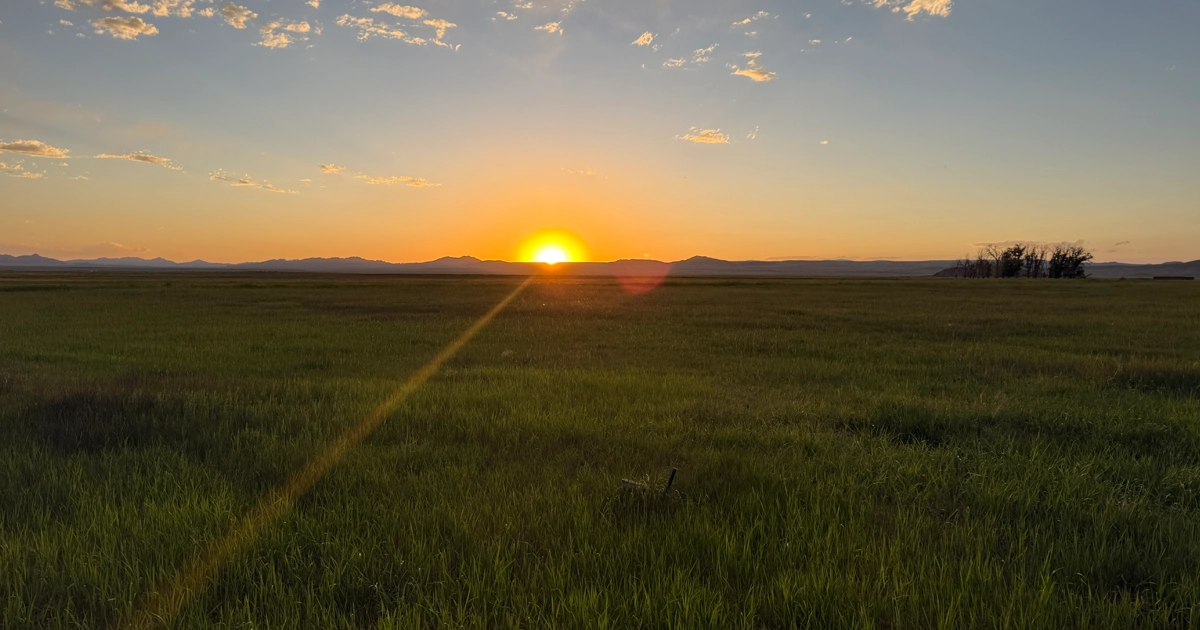
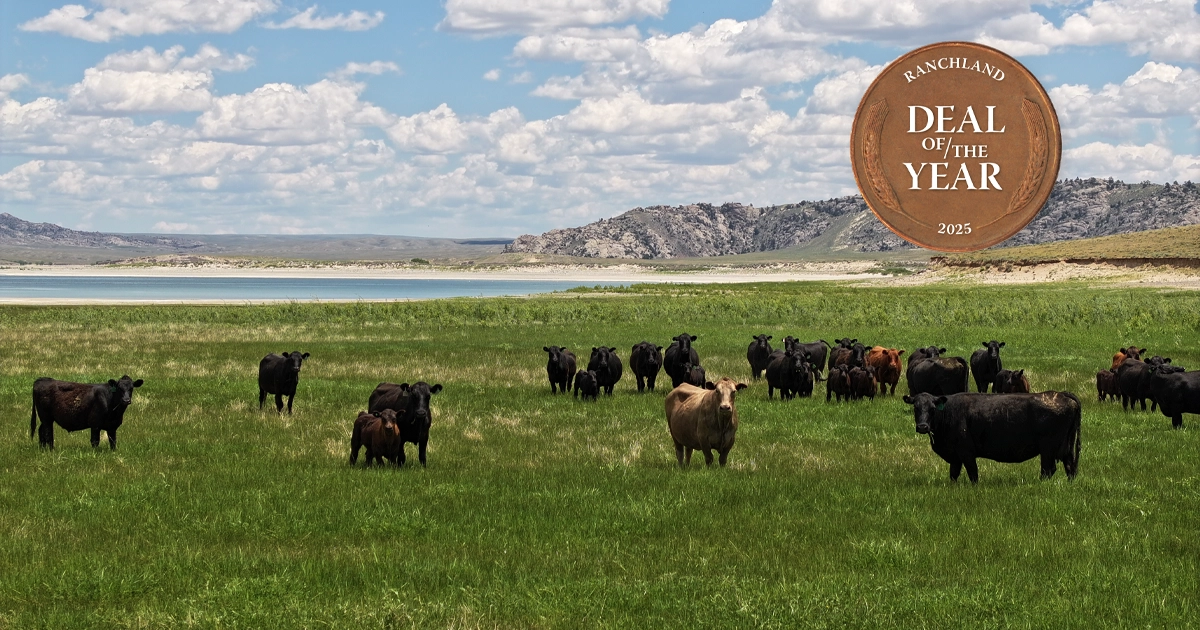
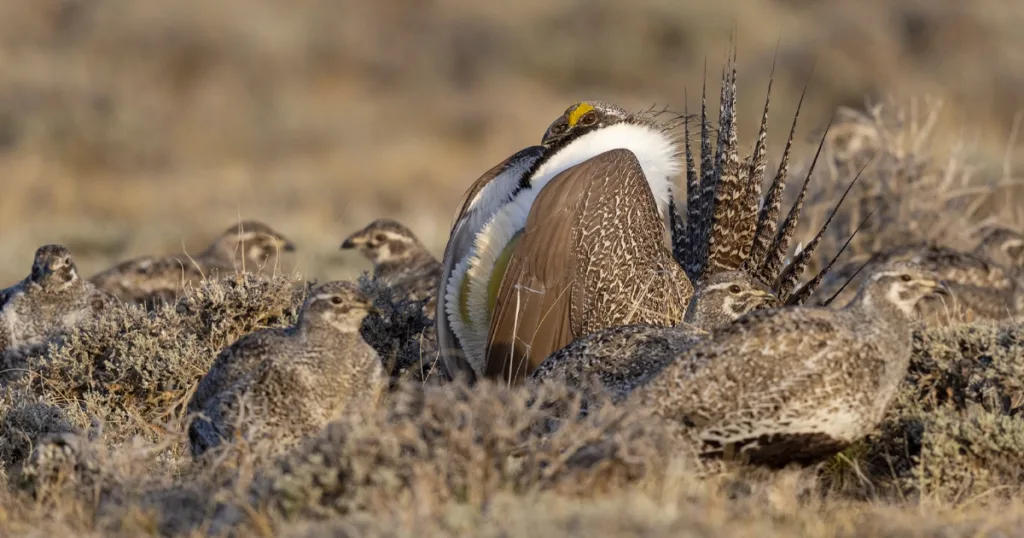
BALANCING COMMERCE AND CONSERVATION. On Pathfinder, more than 3,400 cows, 180 bulls, and 7,500 yearlings coexist with the nation’s first sage grouse conservation bank.
Published April 15, 2026

In January, Swan Land Company’s Buffalo, Wyoming, office announced the sale of the Pathfinder Ranches, a historic 916,000-acre outfit listed for $79.5 million, to The Ensign Group. David Anderson and Matt Anderson of A5 Real Estate represented Ensign. Financial terms were not disclosed. The acquisition by Ensign was the latest chapter in a story that has been unfolding out West over multiple decades.
Ensign Group
In the mid-20th century, David Robinson and David Freed co-owned the 200,000-acre Deseret Land and Livestock Ranch in Utah with Ken Garff. After exiting Deseret Land and Livestock at a profit, the Robinson and Freed families have remained business partners in a great ranch. Siblings Alex, Chris, and Victoria Robinson have spent the past 40 years building their ranching business.
Today, Salt Lake City-based Ensign Group ranks as one of the largest cow/calf producers in the nation. The company owns, operates, and manages more than 1 million acres of private and public lands in Utah, Idaho, and Wyoming under the Ensign Ranches flag. CEO Chris Robinson was 13 when he first learned the family trade.
“Dad sent me out to work on the ranch in Bannock County, Idaho,” Robinson recalls. “I was a city kid, but summers, I’d go live with the ranch manager. I did that all through high school.
“This is our 82nd year,” says Robinson. “Dad — his name was David A. Robinson — started in 1944. Unfortunately, he’s been gone almost 40 years.” Ranching was the Robinson family legacy. It’s also their future. “I’m not a cowboy. To look at me you wouldn’t think I know the front end of a cow from the back. But I’ve spent a lot of time outdoors and on these ranches,” Robinson says. “We’ve been blessed with some wonderful landscapes that have a lot of wildlife. I love being on them.”
“We’ve also been blessed with the best team of ranch managers and crew, led by General Manager Jeff Young, who has been key for making us successful for the last three decades,” he adds.
“We Want It”
Four years ago, Ensign Ranches began looking for a yearling ranch in Wyoming with access to markets along Colorado’s Front Range. In 2021, it purchased the 100,000-acre Stone Ranch, a Hall and Hall listing adjacent to Pathfinder.
“Our manager, their crew, we got to know each other,” Robinson says. “Their cattle would wander on us. Our cattle would go on them. We got to know what was in the neighborhood. While we didn’t anticipate buying another ranch so soon, when we got word early on that Pathfinder might be for sale, we said,
‘Great. We want it.’ ”
The rest of the world got wind of the opportunity when The New York Times ran an article that trumpeted the listing. “A Ranch Four Times the Size of New York City for $79.5 Million” promised “Home, home on the million-acre range.”
By then, Robinson had a plan in place. By the end of the year, a deal was in hand.
When Scott Williams at Swan Land Company got the Pathfinder listing, he knew it would be most appealing to a production-minded buyer. “Somebody who understands the economic metrics of dollars per animal unit. It was going to be someone who understood the cattle business. These guys lined up perfectly,” he says.
A typical showing of the enormous ranch involved meeting a client on or near the property and driving 350 miles to see the highlights. Serious buyers, Williams says, did not want to tour the Pathfinder from a helicopter.
“Because this ranch was appealing to the production-minded landowner, most buyers opted to see it from the ground so they could get a sense for the condition of the rangeland, improvements, and irrigation infrastructure,” Williams says.
Blending Economic Drivers and Environmental Stewardship
The Ensign Group’s mission is to “own and operate a portfolio of primarily real estate-based businesses that are profitable, durable, environmentally sensitive, and of high reputation in their respective fields.” The company ranked No. 31 on the 2026 Land Report 100 with 373,000 acres and plans to operate their new cattle operation as Pathfinder Ensign Ranches. The nation’s first sage grouse conservation bank, approved by the US Fish and Wildlife Service, will remain in operation on the property.
Williams believes that Ensign Ranches has a “clear commitment to honoring the ranch’s cattle legacy and conservation ethic.
“This feels like a genuinely positive transition for one of America’s most distinctive properties,” Williams says. “Watching a family-owned operation with Ensign’s ranching values and operational standards step in as the next steward of Pathfinder is encouraging on many levels.”
For Robinson, the purchase was not just about buying land. Great ranches, he says, are built over generations, shaping the character of the West.
“We are accepting responsibility and stewardship for a significant piece of the country’s natural resources and cultural and economic fabric,” he says. “At Ensign, we’ve spent decades proving that production agriculture and conservation aren’t competing interests.”
Wyoming’s Largest Ranch
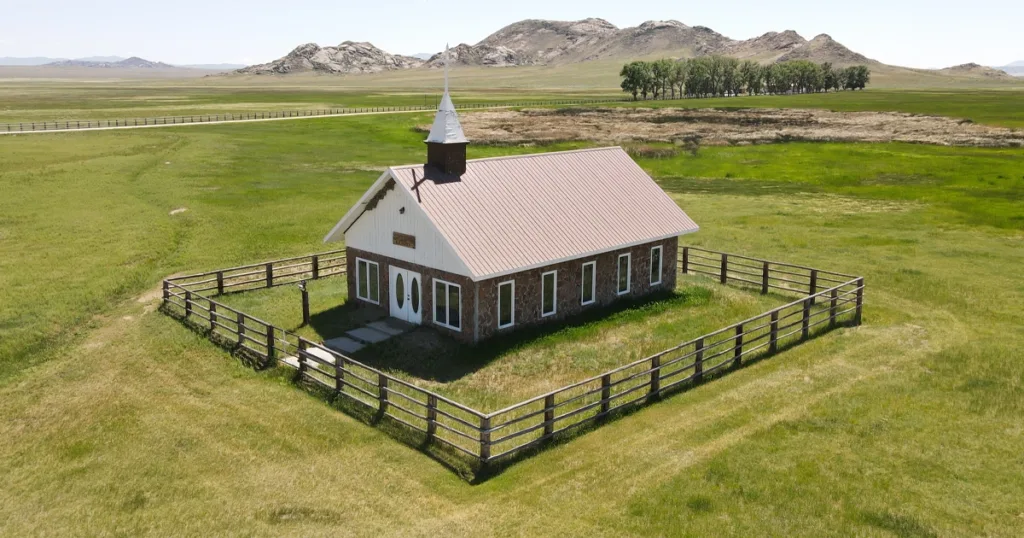
Larger than Delaware, Pathfinder Ranches comprises more than one percent of Wyoming’s total landmass. An assemblage of 12 ranches, each with their unique history and under unified ownership across four counties, the operation stretches from Devil’s Gate to the Pedro and Ferris Mountain ranges. It includes a diverse landscape of high plains, rolling foothills, and broad river valleys, including 20 miles of the Sweetwater River and reaching to the North Platte River.
The ranch offers a powerful combination of working scale, water resources, wildlife habitat, and landmark scenery, including iconic emblems of westward expansion such as Independence Rock, the original Pony Express Trail, the Mormon Pioneer Trail, and the Oregon Trail. The property is 45 miles from Casper.
“This is an area of Wyoming we’ve really come to like. It’s great cattle country,” Robinson says. “And it’s beautiful. It’s got a lot of wildlife, and it’s really productive. We could have spent a lot of time piecing together other ranches, smaller ranches here and there, but any time there is a ranch next to us, we’re interested, especially one that has operational scale.”
Ideal Outcome
Robinson insists that Ensign Ranches follows a Hippocratic oath of ranching: First, do no harm. “We don’t want to mine the land. Mining occurs when you have short-term thinking and you’re not going to give anything back. You are just going to take, take, take until the land gets to a level it can’t give anymore,” he says. “The way we try to avoid doing that is by developing optionality through improvements and the ability to spread water. That’s the very first thing we do.”
Large-scale properties such as Pathfinder often have areas of more utilization than others strictly due to water availability. “We install a lot of stock water and want it to have the dual purpose of providing wildlife water,” Robinson says. “We want to do it in a way that water can be on or around during times that are also beneficial for wildlife, especially for ungulates.”
Establishing a Grazing Plan
Timing grazing to benefit the land is also key, he says. “We try to avoid season-long grazing where we just dump cattle off to stay the whole summer. We’re mindful that many of these places have cool-season grasses, which means that in the spring, the temptation is to try to turn cattle out too early,” Robinson says. “We try to come up with a grazing plan that gives the grass as good an opportunity as possible.”
Ensign also prioritizes investments that give the company optionality in the event of a fire or a drought. “We don’t want to reduce our mother-cow herd, so we create resiliency and redundancy in the system,” Robinson says.
Robinson is an elected member of the Summit County (Utah) Council and is involved in many land and water conservation and management organizations, including a recent appointment to the Utah Wildlife Board. He was nominated by Utah Governor Spencer Cox and approved by the Utah Senate.
Finding a buyer such as Ensign, with a proven commitment to “responsible ranching and conservation, ensures Pathfinder’s legacy will continue,” says Ryan Lance, president of Pathfinder Ranches.
“That’s the best outcome we could hope for,” Lance says.