Own Your Own Rembrandt
Own Your Own Rembrandt
LR_Rembrant-02
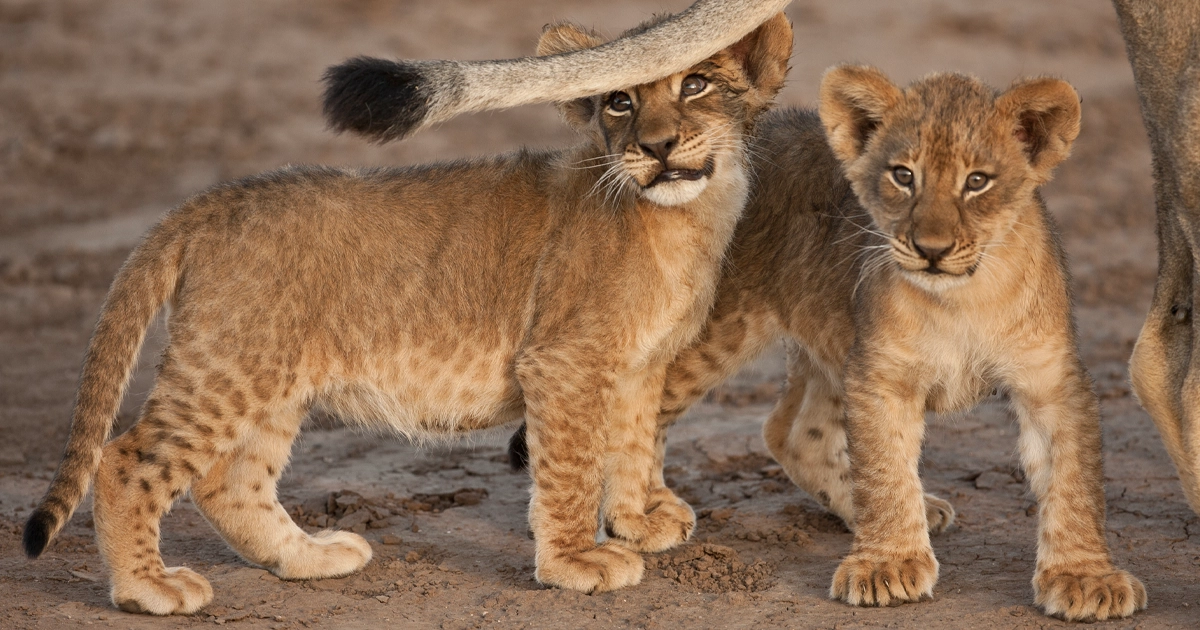
BENEFICIARIES. All proceeds from the sale of the Rembrandt will be deployed to habitats where wild cats are imperiled.
Published January 1, 2026

Thomas Kaplan has a novel perspective. An international investor with a PhD in history from Oxford, he’s spent his career studying the aspects of modern life that endure across the ages and accrue priceless status. Apart from his beloved family and friends, he places three priorities atop his short list. Each is so scarce that it can never be replaced if lost: one-of-a-kind fine art masterworks; the survival of imperiled wild animals; and natural landscapes of the highest quality.
“There exists a finite number of each of those remaining. Their intrinsic worth far exceeds their value as a commodity,” says Kaplan, 63. “But once they disappear, then they will be lost forever. I don’t want my children and future generations to look back and wonder why we didn’t do more to save them while there was still time.”
One of the hallmarks of Kaplan’s career has been his uncanny ability to see around corners and identify opportunities and warning signs. Seldom, he says, has he felt a greater sense of urgency about the loss of species.
On February 4, 2026, Kaplan and a close ally in conservation, Jon Ayers, will do something unprecedented. The two are putting up for auction a 400-year-old tour de force to benefit wildlife and natural-habitat protection.
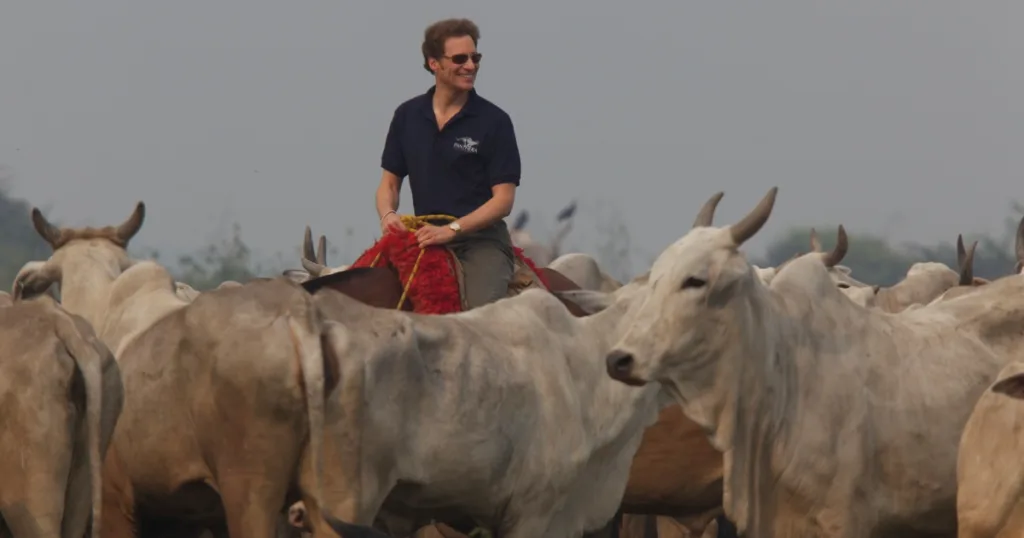
CATTLEMAN AND CONSERVATIONIST. Much like Ted Turner, Kaplan believes that landowners can implement market-oriented conservation programs.
February 4 Auction at Sotheby’s
Young Lion Resting, a rare animal drawing rendered by Rembrandt van Rijn (1606-1669), is being offered for sale by Sotheby’s in New York City (sothebys.com) to raise funds for vital conservation work to be carried out by Panthera, a nonprofit that Kaplan and his wife, Daphne Recanati Kaplan, co-founded in 2006 with the late Dr. Alan Rabinowitz.
TIME magazine called Rabinowitz “the Indiana Jones of wildlife conservation” for fearlessly bringing attention to the plight of wild cats. Rabinowitz occupies the same kind of heralded position in the pantheon of conservation as Jane Goodall did in giving voice to chimpanzees.
Today, Panthera is celebrated as the global leader in science-driven conservation and advocacy, driven by its ambitious mission to save all 40 species of Felidae (wild cats). Iconic species include lions, tigers, cheetahs, jaguars, pumas, leopards, and snow leopards.
When Kaplan and Ayers made the announcement in 2025 that they would sell the Rembrandt drawing, executed sometime between 1638 and 1642, it seized the attention of astonished art collectors around the world.
The Power of Fine Art
Fine art has long been a powerful catalyst in advancing support for conservation. Thomas Moran’s portrayal of the Grand Canyon of the Yellowstone inspired Congress in 1872 to set aside Yellowstone as the country’s first national park. Today, Moran’s work, hailed as an important element of American heritage, hangs in the National Portrait Gallery, a stone’s throw from the US Capitol. President Theodore Roosevelt praised Romantic painters who journeyed west and made citizens aware of the plight of bison. Millions of sportsmen and -women cherish original artwork and limited-edition prints of their favorite wildlife paintings as expressions of their values. The sale of duck stamps featuring waterfowl has generated more than $1.2 billion and supported the protection of more than 6 million acres of wetlands.
Never has a single artwork held the potential to create more far-reaching impact than Rembrandt’s lion. The stakes are high for wild cats, Kaplan says, and he and Ayers are using the master’s drawing to up the ante. Just how coveted are original Rembrandt paintings? In 2022, The Standard Bearer was acquired by the Dutch government for $198 million.
While it’s a thrill for anyone to see a big cat prowling the wild, the Rembrandt drawing commands an elusive mystique all its own. Art historians say it could deliver a gavel price exceeding $20 million, a record for wildlife-themed art.
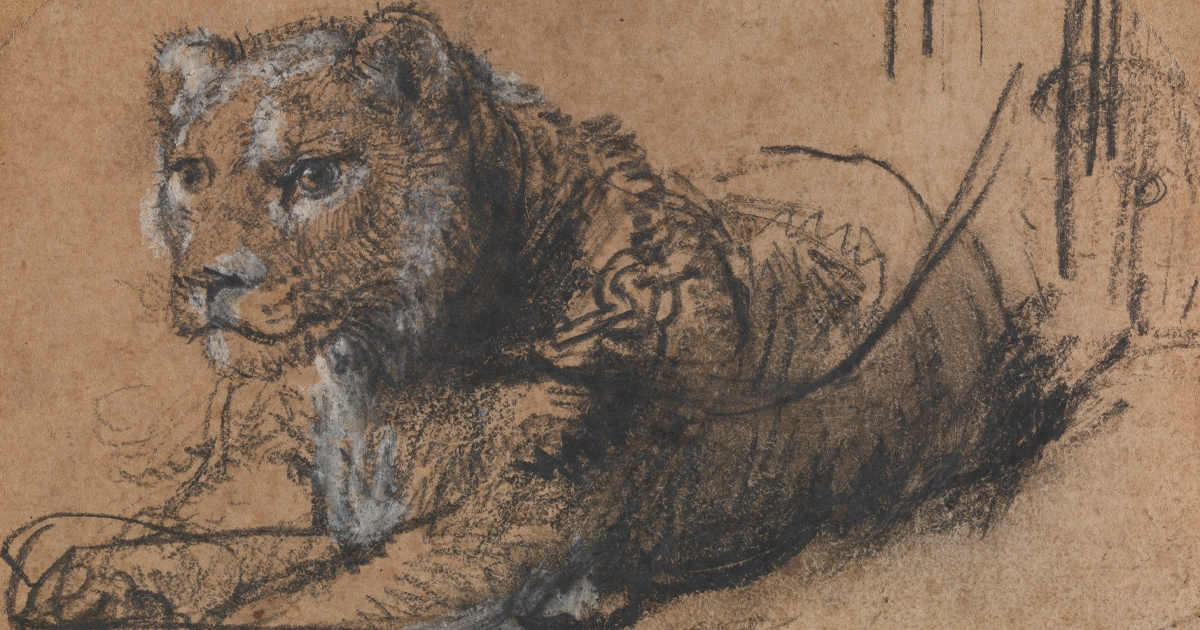
YOUNG LION RESTING. The most important drawing by Rembrandt to appear at auction in half a century goes to auction at Sotheby’s on February 4.
Young Lion Resting
Gregory Rubinstein, head of the Old Master Drawings department at Sotheby’s, said Young Lion Resting “is one of only a small number of drawings we know by Rembrandt of animals, and it is an unbelievably powerful, strong image of the spectacular creature, the lion. You are locked onto the eyes; there’s no avoiding that. It almost transports you into the heart and soul of the lion in the most extraordinary way. One can safely say there has been no Rembrandt drawing of comparable importance on the market for half a century.”
Kaplan and his wife, Daphne, acquired Young Lion Resting in 2005. Their first Rembrandt, it marked the inception of The Leiden Collection, which they named after Rembrandt’s birthplace in the Netherlands. The Leiden Collection now boasts the world’s largest holding of original Rembrandts in private hands and includes the only privately held works by Vermeer and by Carel Fabritius of The Goldfinch fame.
In recent years, the Kaplans have come to share ownership of Young Lion Resting with Ayers, who succeeded Kaplan after 15 years as Panthera’s board chair. Ayers and his wife, Helaine, are also devoted to the cause of wild-cat preservation — becoming the foremost donors ever to the conservation of the world’s 33 smaller cats.
Lifelong Devotion to Rembrandt van Rijn
Kaplan first fell in love with Rembrandt as a boy when his mother took him to the Metropolitan Museum of Art in New York City. Later, while growing up in Florida, he kept a menagerie of snakes, turtles, and frogs at home. During his rise as an investor in hard-rock mines, he always followed and admired the scientific adventures of Rabinowitz.
“I came to realize that I could never be the kind of scientist Alan was, but I made a promise to myself that if I ever had enough money that I would support his work and the generations of young researchers following in his wake,” Kaplan says.
Kaplan and Ayers believe that wild cats represent perfect “umbrella species.” Their fates are bellwethers for others in larger ecosystems. Protect the habitat and ensure the survival of big cats with large home ranges, as well as smaller cat species filling other distinctive niches, and the benefits extend to thousands of other animals and plants.
All proceeds from the sale of the Rembrandt drawing will be deployed to areas where wild cats are at high risk of disappearing. In the case of African lions, their numbers have fallen from perhaps a million a century ago to less than 20,000 today.
Perilous Precipice
“The land that lions were able to roam is down by 95 percent, if not more,” Kaplan says. “At this very moment, there are subpopulations of lions, such as in Western Africa, that are critically imperiled and could vanish in a matter of months due to military conflicts and poaching.”
Kaplan has found that owning land has brought unexpected rewards. Helping to educate others about the dividends of habitat stewardship has unlocked a deeper sense of meaning and purpose, he says.
While public-land conservation is critical, privately owned tracts routinely hold significant ecological value. Kaplan believes in the ability of private enterprise to do things faster, better, and more effectively than its public counterparts, including conservation. He was inspired by the pioneering land-buying strategies of Ted Turner, who has managed several large Western ranches to sustain bison populations and whose stewardship practices have aided in the conservation of public wildlife moving across his properties.
More than a decade ago, Kaplan journeyed to Montana to visit Turner’s flagship ranch, the Flying D outside Bozeman, where he spent an evening watching and listening to one of the largest wolf packs in the wild. Kaplan and Rabinowitz subsequently applied insights about how the two species — bison and wolves — coexist to their own strategies for preserving wild cats.
The Pantanal
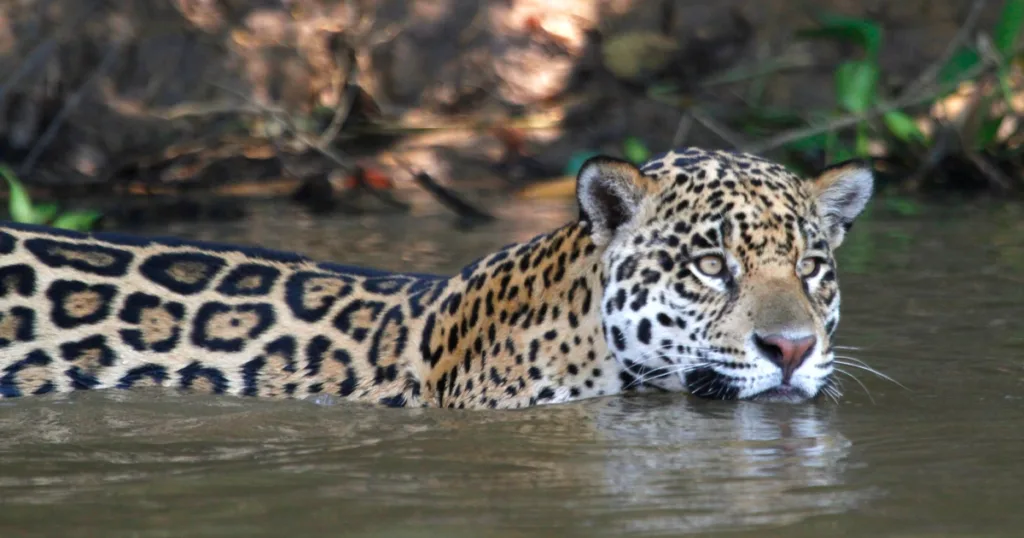
While on fact-finding missions to advance his understanding of conservation, Kaplan accompanied Rabinowitz to Southwest Brazil where, amid a vast complex of tropical wetlands known as the Pantanal, they confronted a problem of chronic conflict between an isolated population of jaguars and cattle ranchers.
“The ranchers saw jaguars as a threat; a hindrance to their livelihood,” Kaplan says. “Tracking the trajectory of the jaguar population, it was destined to keep declining over time unless something changed.”
To change the perception of the jaguar into an asset, not a liability, Kaplan acquired cattle ranches that were operating on the margins of economic viability along a stretch of the Cuiabá River. He then enlisted their gauchos as protectors. His first challenge? To find out what they needed in their day-to-day lives. The response? Good schools for their children.
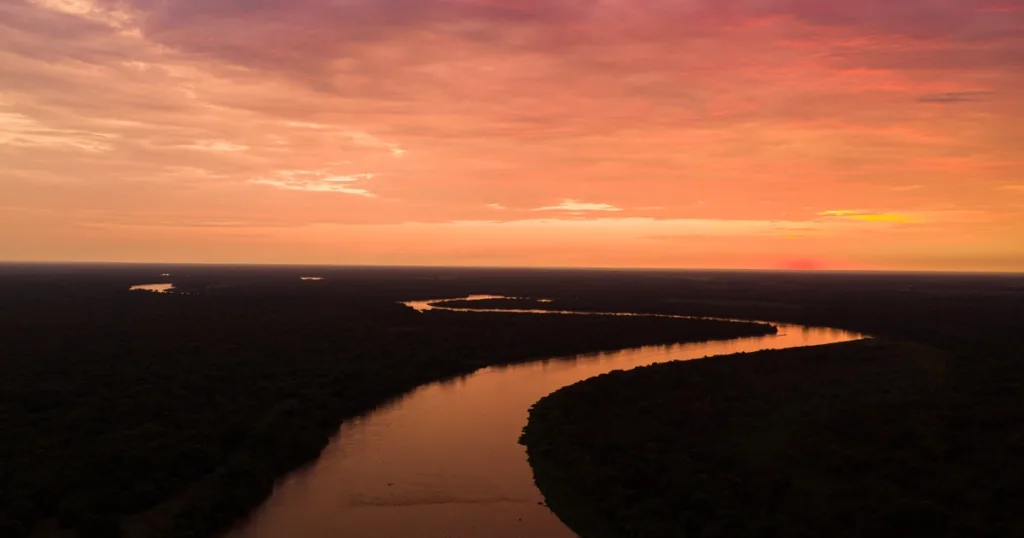
CUIABÁ RIVER. An ocean of water inundates the world’s largest wetland.
Jofre Velho Conservation Ranch
Kaplan took this insight to heart. While creating the 25,000-acre (10,000-hectare) Jofre Velho Conservation Ranch, he also established a school for rural children living along the Cuiabá River. In partnership with the Icahn School of Medicine at Mount Sinai in New York City, Kaplan brought in medical personnel to provide health care and other services. Soon, the locals began associating wild-cat conservation with a brighter future for their children. Jaguar deaths dropped markedly.
The Jofre Velho Conservation Ranch has become a hub for ongoing jaguar research, ecotourism, and education. That portion of the Pantanal is now revered as the best place for nature lovers to spy jaguars in the wild — especially to witness the big cats stalking and feeding on caimans, members of the alligator family.
Almost immediately, the income opportunities for gauchos increased. Eager wildlife watchers required trusted guides. In short order, the revenue generated by nature tourism in the Pantanal exceeded the value of the livestock lost to jaguars.
The most consequential achievement of Panthera is its vast network of field scientists. They advise private landowners and governments worldwide on possible ways to coexist with big cats and to reduce potential conflict. Kaplan admits that fewer things in his career as a capitalist have brought him more joy than reversing the plight of this once-doomed species.
Turning Gold into Tigers
David Macdonald, a globally renowned conservation biologist and the founder of the Wildlife Conservation Research Unit at the University of Oxford, once observed: “While the world is trying to turn tigers into gold, Tom Kaplan has done something extraordinary: He’s turned gold into tigers.”
Now Kaplan aims to do something similar by using fine art, translating Rembrandt’s timeless homage to a lion into value for the living and breathing big cats on the ground.
Kaplan has no doubt that were the Dutch master to see the considerable public good generated by Young Lion Resting some 400 years later, he would be overjoyed.
Says Kaplan, “It’s Rembrandt’s way of reaching out and benefitting a future that he didn’t inhabit — and yet he profoundly inspired.” 
The Wall Street Journal reports that Young Lion Resting set a new record for a drawing by Rembrandt when it sold for $17.9 million on February 4.
Published in The Land Report Winter 2025.