2025 Historic Deal of the Year:
The Conservation Fund Acquires James Monroe’s Oak Hill
2025 Historic Deal of the Year:
The Conservation Fund Acquires James Monroe’s Oak Hill
sdsdds
By Cary Estes
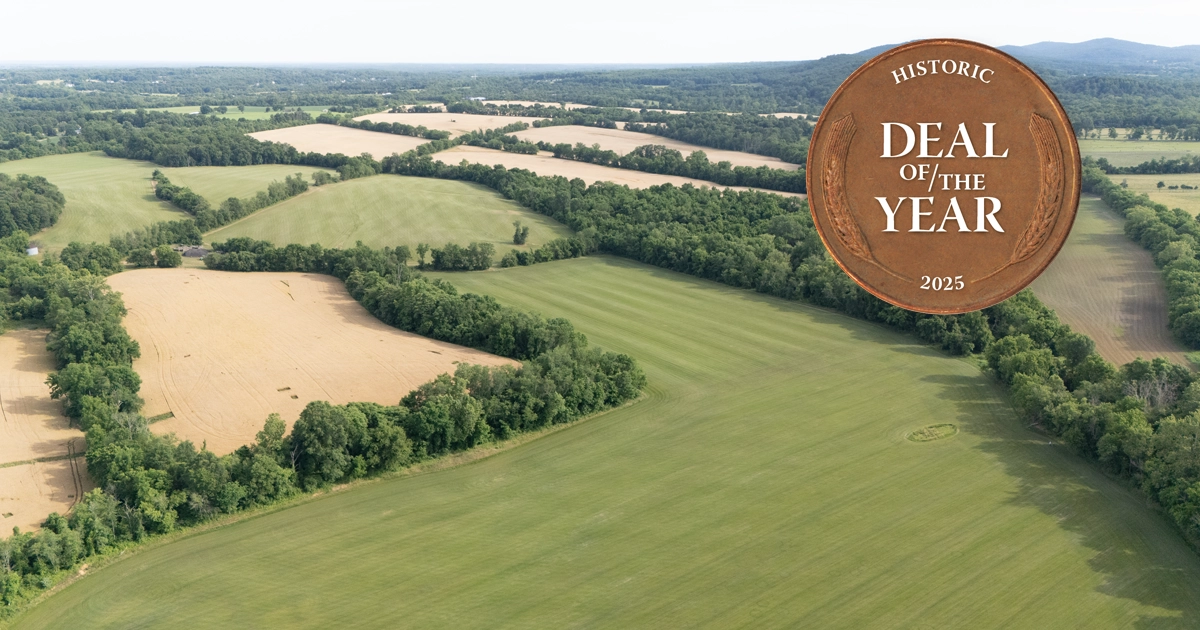
LR_DoY_Historic-01
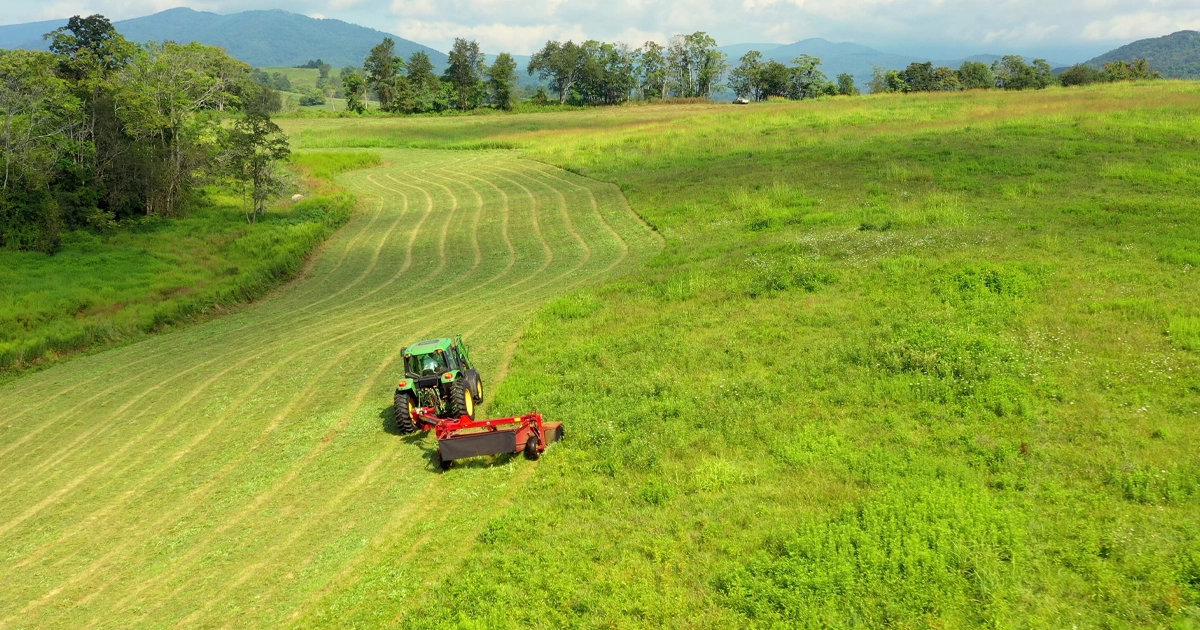
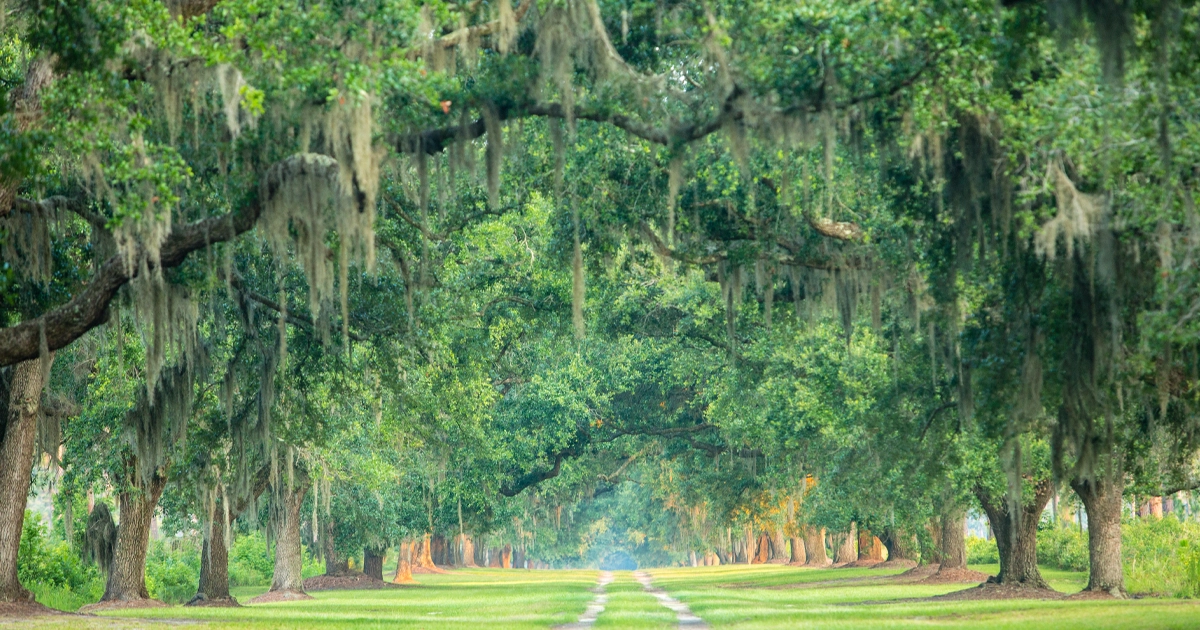
GREEN SPACE. In addition to its historic value, Oak Hill anchors a swath of open land in an increasingly crowded commercial corridor
Published April 15, 2026

Oak Hill, the magnificent estate of President James Monroe, has been permanently protected through the efforts of The Conservation Fund, which helped engineer its acquisition. The $20 million transaction is duly recognized as the 2025 Land Report Historic Deal of the Year.
Propelled by widespread public support, The Conservation Fund was able to secure the preservation of the 1,200-acre estate of the fifth president of the United States. Located in Loudoun County, Virginia, along the west side of US Route 15 some 40 miles west of Washington, D.C., Oak Hill was the last remaining residence of a Founding Father in private ownership.
As a result, the property’s lush forests and open meadows – as well as Monroe’s well-preserved Georgian-style mansion – were susceptible to being overtaken by urban sprawl in fast-growing Northern Virginia. Instead, it is now in the early stages of possibly becoming Virginia’s newest state park.
“Oak Hill is a significant part of America’s land legacy. These are the lands that have shaped us as a nation and defined us as a people,” says The Conservation Fund CEO Larry Selzer. “But Oak Hill is also so much more than just an historical piece,” Selzer adds. “It’s rare green space in a rapidly growing region. On the east side of Route 15, it’s entirely developed all the way to Washington, D.C.”
“So Oak Hill is the last large, open-space block separating the developed part of Northern Virginia from the historically agrarian part. It’s situated as a backstop for protecting the culture, habitat, and farming community of what Virginia used to be like hundreds of years ago. If we had not been able to protect Oak Hill, it likely would have been converted to housing or used for data center development. That would have destroyed all the elements that Oak Hill represents,” Selzer says.
A broad coalition helped The Conservation Fund acquire Oak Hill, which had been owned by the DeLashmutt family for more than 75 years. The Loudoun County Board of Supervisors, the federal Land and Water Conservation Fund, and the Virginia Land Conservation Foundation all contributed funds to the purchase price.
“These types of projects transcend partisanship and the urban-rural divide. It’s about telling the story of the history of America,” Selzer says. “I like to call it a doorway project. It opened a door, and lots of people walked through it. That is the best of conservation. It’s not just about the wildlife and the open spaces. It’s about what it means to the American people.”
In a news release announcing the deal last November, Gayle DeLashmutt stated, “Oak Hill has been part of our family’s life and legacy. We’ve always recognized that its history and significance reach far beyond us. It means a great deal to know this place we’ve cared for so deeply is now in the hands of dedicated stewards who share our hope that Oak Hill’s story will continue to be honored, protected, and thoughtfully shared with others.”
The Conservation Fund is working to transfer Oak Hill into public ownership, with the goal of eventually establishing it as a state park that will provide opportunities for hiking, horseback riding, and heritage tourism. That decision ultimately will be made by Virginia’s governor and general assembly, which began formal consideration of the proposal in January. “The possibility of a state park remains to be seen, but the important thing is that Oak Hill is now protected,” Selzer says. “We have options to work with either the state or the county or maybe some third option. But it will end up being a public destination for all.”