Green Diamond Transfers Sacred Ground
LR_ReedFamily
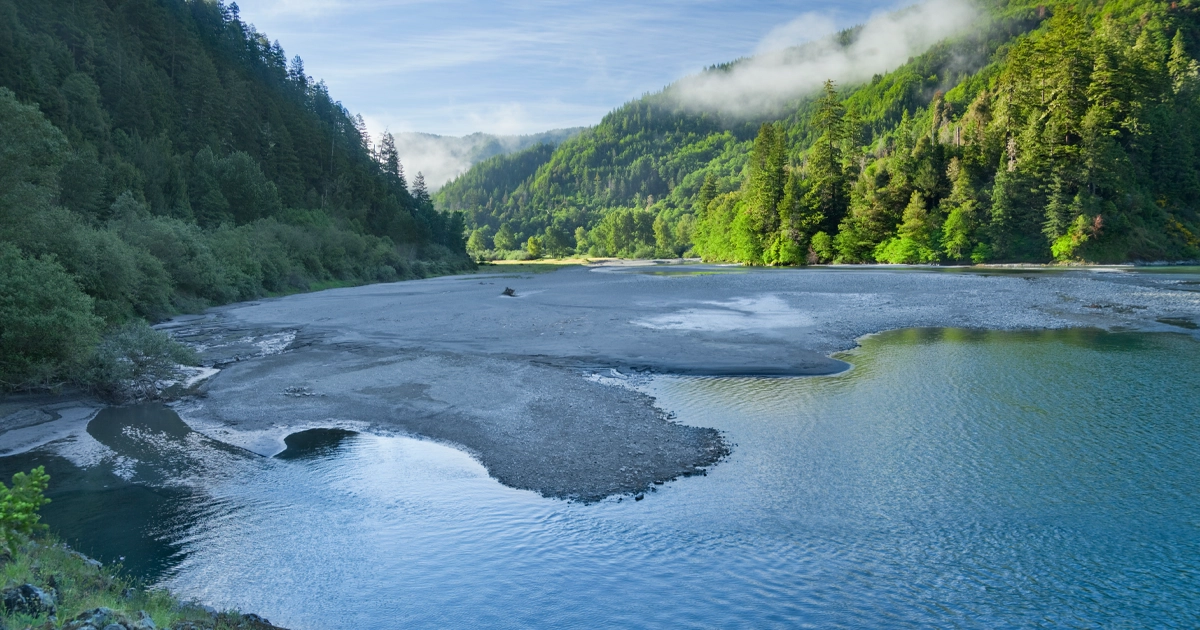
VITAL SOURCE. Blue Creek’s cooling waters are critical to the survival of Chinook and coho salmon and steelhead trout.
Published January 15, 2026

A two-decade effort to restore ancestral land along the Klamath River culminated in May with the transfer of 47,097 acres belonging to the Reeds’ Green Diamond Resource Company, a move that more than doubled the land holdings of Northern California’s Yurok Tribe. The deal originated with the Reeds, who decided to sell the acreage, parts of which the tribe considers sacred land.
Despite never purchasing property directly from the Yurok, the Reeds have long supported the tribe’s vision of acquiring, owning, and managing land within the boundaries of its reservation.
The Right Thing to Do
“For all of us, there was this idea that it was really the right thing to do,” says Doug Reed, Green Diamond’s president and chairman. “It’s about values: What do we want to be as a company and what will serve us well in the long-term?”
Reed credits his local management team with identifying the opportunity, then shepherding the complex sale, which took place in phases, starting with a letter of intent in 2005. Three years later, Green Diamond entered an option agreement with the nonprofit Western Rivers Conservancy as the buyer/agent for the Yurok Tribe. At stake was the future of 73 square miles of land arrayed around the headwaters of the Klamath River in Northern California.
“There were lots of challenges with the deal, and if someone had said it was going to take 20 years, we might have wondered if there was a different way to get to the same outcome,” Reed says. “But in the end, everyone seemed really happy to get to the finish line.”
22 Amendments and Eight Separate Closings
The initial agreement required 22 amendments and restatements to accommodate eight separate closings. Galen Schuler, Green Diamond’s general counsel for more than two decades before his retirement in April, remained steadfast throughout the many ups and downs of the protracted transaction.
“The Yurok may not have fully believed our good intentions,” Schuler says, “but everyone agreed that particular places like Blue Creek were of high value to the Yurok for cultural reasons. The fact that the land was of significant importance to them kept us motivated.”
“The Yurok wanted to own and protect a variety of sacred sites,” says Dan Opalach, Green Diamond’s timberlands investment manager before retiring in 2018. “And because the funding was coming in smaller chunks than anyone expected, I can’t even remember how many individual transactions there were.”
Fundraising for the $56 million deal took longer than expected, with direct public grants accounting for only $8 million of the total. Most of the money came from private foundations, corporate philanthropy, carbon credit sales, and the federal New Markets Tax Credit Program. Schuler notes that Green Diamond made “a big economic sacrifice by setting the land aside and not harvesting there for more than 10 years. The opportunity cost for us and our operations and our employees was significant because of the length of time it took to finalize everything.”
Green Diamond also provided financial and property-interest grants to the Yurok Tribe for education, human services, and infrastructure. The grants were separate from the land transaction.
Good Neighbors
“To be good neighbors and good members of the community and to do something like this where we felt we could leave the world a little better place. I think everyone in the family and with Green Diamond was really happy about that,” Reed says.
The Yurok acquisition includes Blue Creek, a critical tributary of the Klamath River and a key source of cold water that enables Chinook and coho salmon and steelhead trout to thrive. The tribe has been a key partner in the dismantling of the existing dams on the Klamath River, thereby reopening a substantial habitat for fish spawning in the upper river. Populations of Humboldt marten, spotted owl, and seabirds such as the marbled murrelet thrive on more than 47,000 acres of forest owned and managed by Yurok. The redwood- and mixed conifer-heavy area has been renamed the Yurok Tribal Community Forest.
“We are forging a sustainable future for the fish, forests, and our people that honors both ecological integrity and our cultural heritage,” Joseph L. James, chairman of the Yurok Tribe, said in a statement in June.
“I really credit our employees on the ground for seeing this through,” says Reed, whose family’s sixth-generation, forest-products company sustainably manages 2.2 million acres of timberland in Washington, Oregon, California, Montana, Alabama, Florida, Georgia, Mississippi, and South Carolina.
Says Reed, “This is an excellent example of groups coming together from varying backgrounds and perspectives for a very positive outcome.” 
Published in The Land Report Winter 2025.
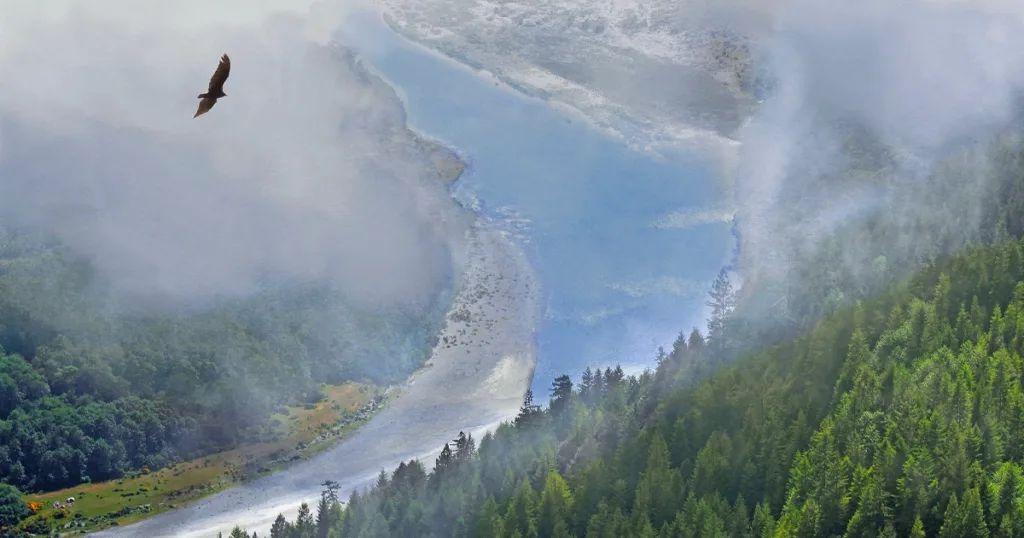
KLAMATH RIVER. The 73 square miles of timberland border the headwaters of the Northern California river.