Hurricane Isaias Wallops Coastal Timberlands
LR_HurricaneIsaias_Timberlands-01
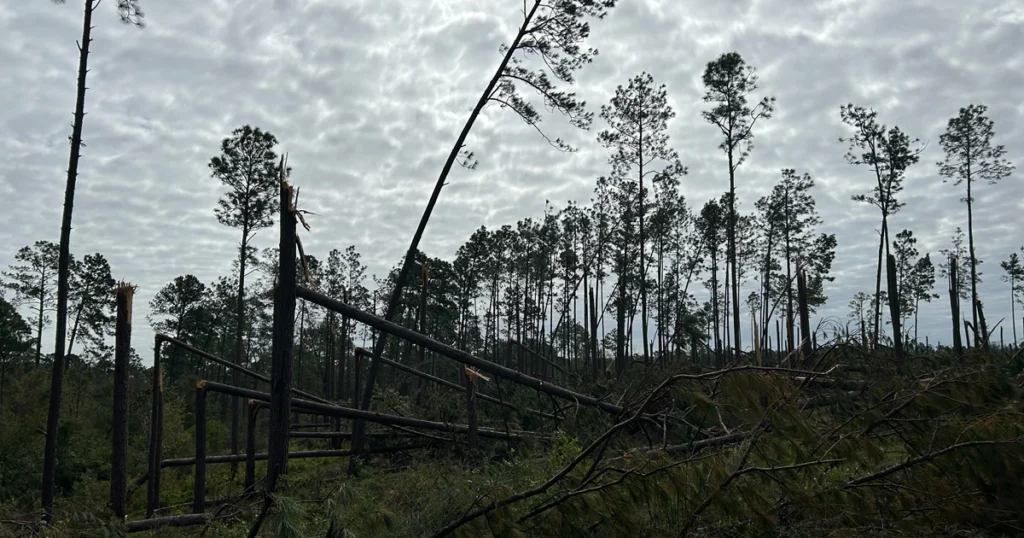
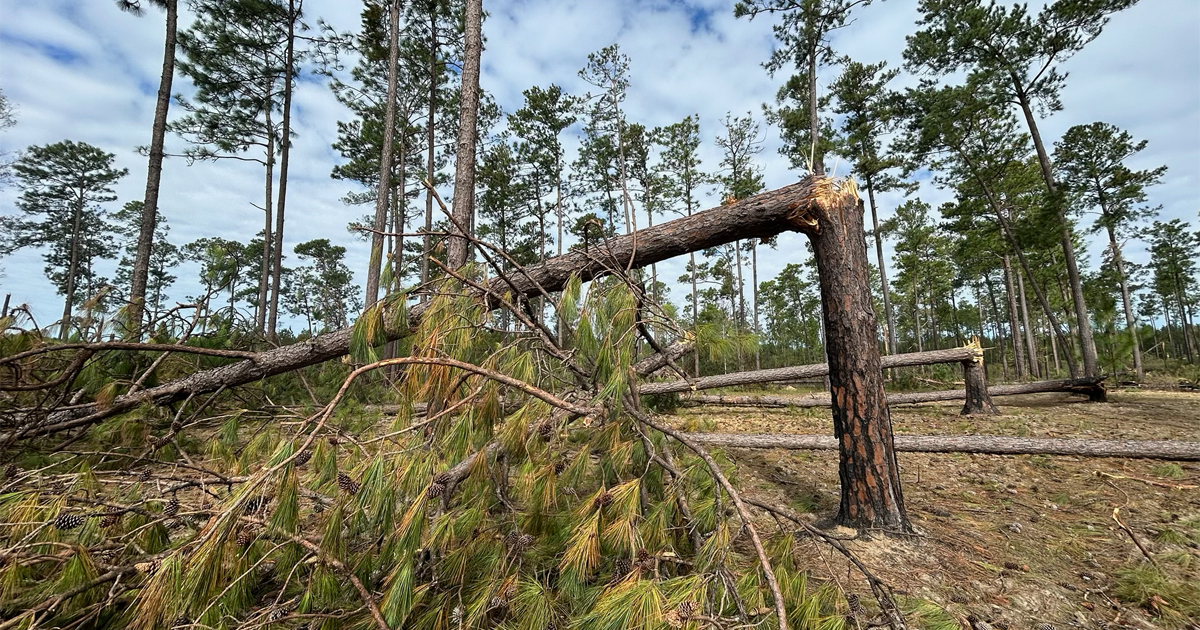
STING JETS. Powerful airstream bands produced ground-level winds in excess of 100 mph and snapped mature trees in half.
Published November 18, 2026

There was an initial sigh of relief after the only Atlantic hurricane of 2026 – Hurricane Isaias – passed through the Florida Panhandle and Southern Alabama in October. Unlike other recent Gulf Coast “I” hurricanes (Ida in 2021 and Ian in 2022), the Category 3 Isaias did not appear to inflict severe damage on the region.
Alabama and Florida Pounded
Then reports began coming in from timberland owners in the immediate area, and it quickly became evident that Isaias was a literal natural disaster rather than a structural one. Within a few weeks, the Alabama Forestry Commission estimated that the storm caused $33.5 million in timber damage in the state, while the Florida Forest Service’s initial report placed the timber toll at around $30 million in that state.
The culprit appears to have been a weather phenomenon known as a “sting jet,” a powerful, narrow airstream band that descends from the troposphere and can produce ground-level winds of more than 100 mph. The sting jet that emerged from Isaias concentrated much of its wrath on Santa Rosa County in Florida (just east of Pensacola), and a trio of counties across the state line in Alabama (Conecuh, Escambia and Monroe).
“You had localized effects in those communities that were very severe,” says Ryan Peek, Coastal Program Manager for the Alabama Forestry Commission (AFC). “The major damage that we observed was large, timber-sized pine that had been snapped off a third to halfway up. In some places you had entire stands of timber completely wiped out and damaged to a point that financial viability was severely impacted.”
The AFC conducted an aerial survey of the damage in Alabama and identified an impacted area 36 miles long and up to 7 miles wide. The assessment concluded that 154,783 acres were affected, including 64,795 acres classified as forestland and 40,805 of woody wetlands.
Trees Snapped in Half
“It was amazing to see what this storm that seemed pretty benign on a broad scope had done to a very small section,” says Andrea Robards, an extension agent with the Auburn University College of Forestry, Wildlife & Natural Resources based near the Gulf Coast in Mobile. “There was not a tremendous amount of uprooting where soil saturation loosens the roots and the trees topple over. In this event, the trees just snapped in half.”
Robards works closely with several timberland owners in the area to help them manage their property. She says while the financial damage is substantial, she notes that there also is an emotional element for owners who have tended to their trees for decades.
“It’s like a family member to them,” Robards says. “These are people who have actively utilized all the best management practices, and then they suffered really extensive damage. It’s very impactful emotionally.”
Salvage Logging Underway
The primary short-term concern for forestry officials is to assist with salvage logging and cleanup to help landowners recoup some of their investments, as well as to remove timber that can dry up and become a fire danger. Peek says some areas of Houston County in the southeastern corner of Alabama still have not been adequately cleared in the years since Hurricane Michael passed through in 2018.
“Some of those stands weren’t salvaged, and we’re still getting lightning-strike fires there in places where control has been very difficult,” Peek says.
Longer-term, Robards says Auburn University Forestry officials already are discussing ways to try to help timberland owners increase the resilience of their forests during such extreme weather events. However, officials admit there is only so much precaution they can take against Mother Nature.
“With good forest management — utilizing timely thinning and practices like that — you can build as much resilience into that stand as possible,” Peek says. “But growing timber on the Gulf Coast always comes with the risk of hurricane damage.”