The Next Chapter at Eldon Farms
The Next Chapter at Eldon Farms
By Drew Beard
LR_EldonFarms-01
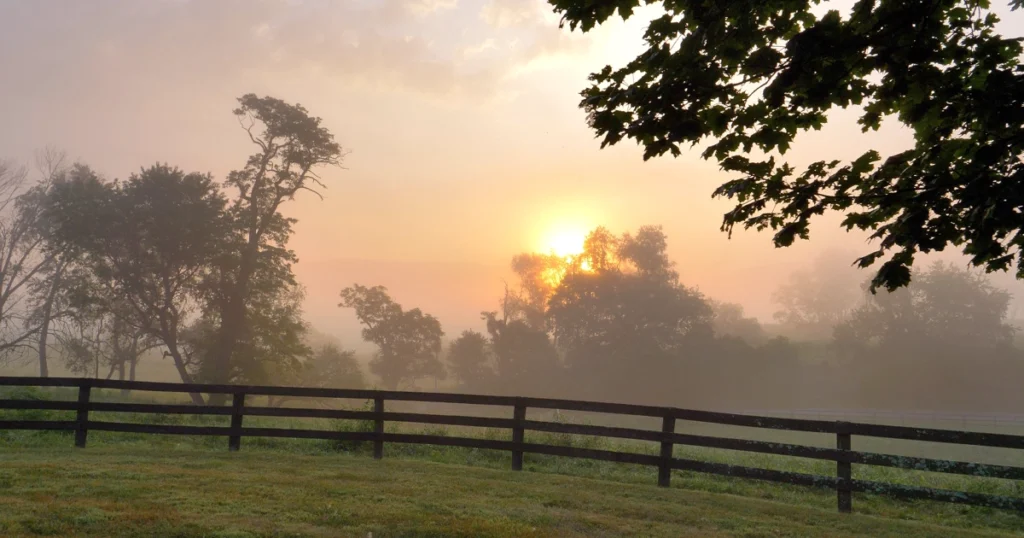
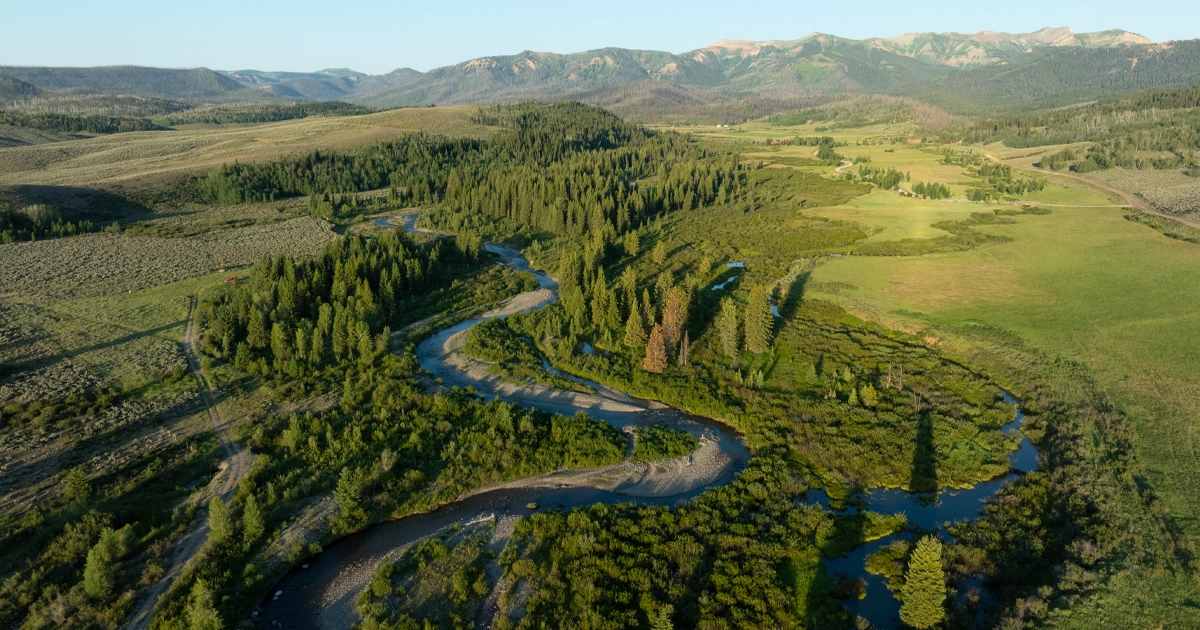
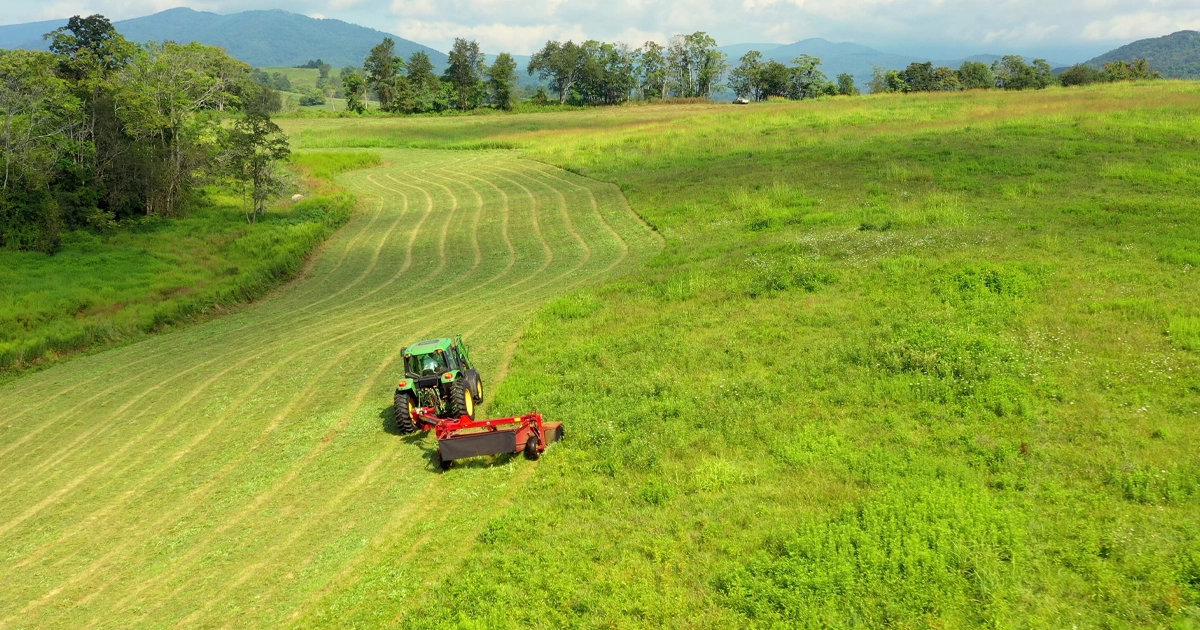
FERTILE GROUND. The historic 11-square-mile property features a significant array of natural resources.
Published August 31, 2026

When the late Bill Lane assembled Eldon Farms in the 1960s, data centers didn’t exist. There was no urban sprawl spilling over the edges of the nation’s capital 70 miles away. It was an age of opportunity that allowed Lane to assemble more than 7,100 acres — one of the largest contiguous landholdings in the mid-Atlantic.
Comprised of equal parts timberland and pastureland, Eldon was devoted to conservation and cattle during the Lanes’ tenure. But when the family listed the property with LandVest and Bates Land Consortium in 2019, there was no guarantee that the next owner would continue that tradition of stewardship.
The Other Bill
Fortunately, another Bill entered the Eldon Farms narrative. The late Bill Dietel was a philanthropist whose work with the Rockefeller Brothers Fund and his own consulting firm, Dietel & Partners, made him an expert at matching ambitious projects with people willing and able to support them. Dietel knew Eldon Farms well. His own farm, Over Jordan, sat just north of the property in Rappahannock County.
“Bill felt strongly that someone needed to protect the land from a real estate developer,” says Eldon Farms Senior Adviser Mike Sands, Dietel’s son-in-law. “He saw the incredible value it had as a single iconic property.”
“Bill always trusted that if something felt like it had to be done, you did it and found the right people for it,” Sands says.
With Eldon Farms, Dietel already had that someone in mind. Chuck Akre was a close friend and neighbor. He was also the founder of Akre Capital Management, a Virginia-based asset-management firm. There was one caveat: Akre wasn’t eager to become one of Virginia’s largest private landowners in his retirement.
“Why is it that I have to buy Eldon?” Akre remembers asking Bill after yet another enthusiastic sales pitch.
“Just buy it,” Dietel replied. “We’ll figure it out.”
Akre was already well into what he calls his “giving back” phase of life. A property of Eldon’s scale made him nervous, but he also understood what was at stake. His neighbors worried that one of the region’s defining landscapes might be lost.
“He was a swell guy,” Akre says of Dietel. Akre is still grateful for the advice that led him to make the 2021 conservation purchase. Not long after the sale closed, Bill Dietel died, knowing full well that Eldon was in good hands.
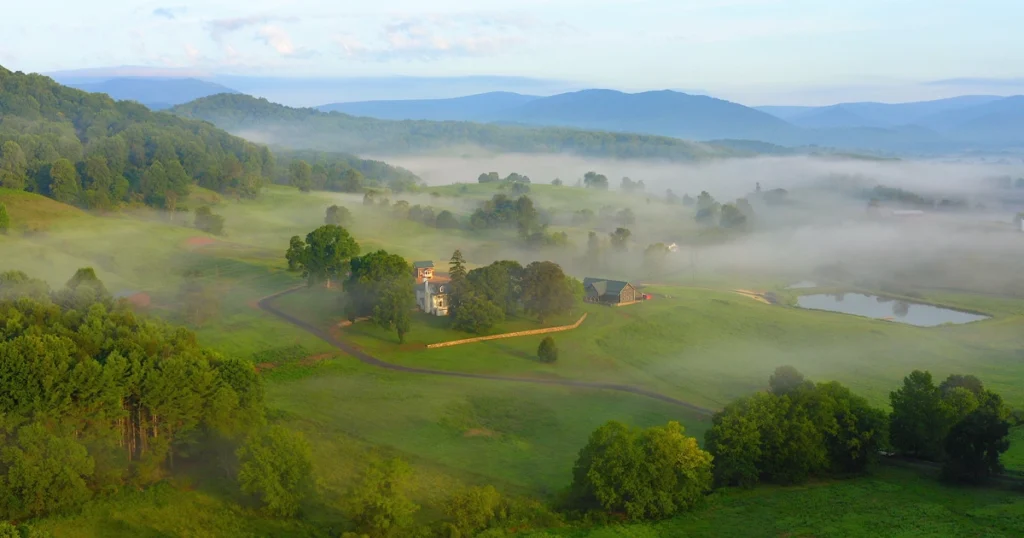
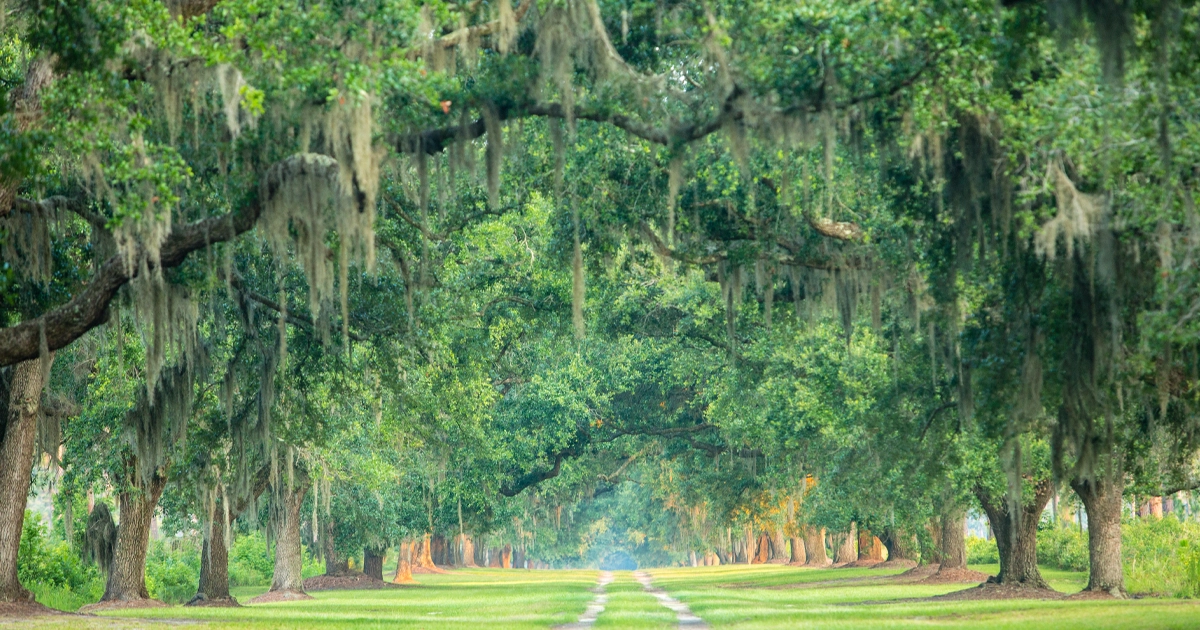
MID-ATLANTIC LANDMARK. The 7,100-acre Rappahannock County holding predates the American Revolution.
Conservation Costs Money
Sixty years after Bill Lane first began assembling Eldon Farms, the property was well run but losing money.
“Once you go through one or more generations, the interest in a large property gets dispersed. And to make these large properties financially viable, you need focus,” Sands says.
According to public records, Akre purchased the farm for $27.6 million — a substantial discount off the original 2019 listing price of $75 million. It didn’t take long for him to realize that preserving 7,000 acres would require more than just good intentions.
“Conservation costs money,” Akre says.
An obvious first step for the Akre family was to gain a better understanding of exactly what they had acquired. They commissioned an updated survey from the Charlottesville-based landscape architecture firm Nelson Byrd Woltz.
“They did a full inventory of the property, including a historical inventory of the people who were here [hundreds of]years ago,” Akre says, emphasizing the importance of Eldon’s human history as well as its natural history.
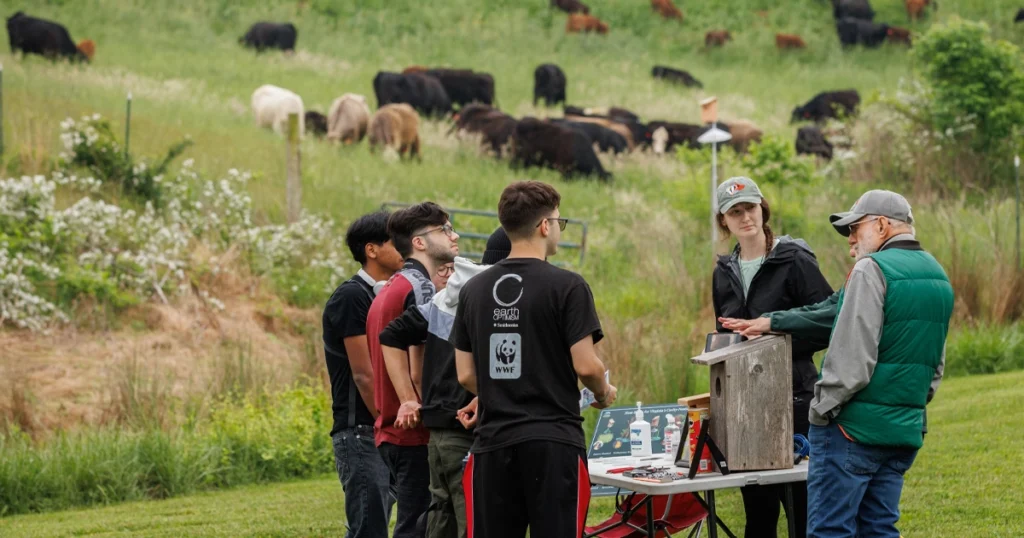
LIVING LABORATORY. The Akers are building a natural asset base that balances commerce and conservation.
Inventorying the Land
At the same time, the Applied Ecological Institute in Wisconsin completed a natural resource inventory. “They did soil work and an overview of the property’s broad ecological systems,” Sands tells me.
Together, those studies became the foundation for a long-term management plan.
“It was more of a design exercise than a financial exercise,” Sands says. “Identifying what kinds of things would be appropriate, including livestock and hunting leases.” Some of those ideas are already taking shape.
“We’ve added hunting leases, which had only been minimal before,” Sands says.
The Akres also purchased Hill House Nursery, a local nursery specializing in native plants. Then they relocated it to Eldon Farms. “It will be able to do a lot more retail work at the farm. It also adds to the expertise the operation has access to in terms of native plantings and future restoration efforts,” Sands says.
Historic Use
Historically, Eldon’s primary focus had been cattle. Although Bill Lane assembled Eldon Farms in the heart of what was once Virginia apple country, he built a cattle operation that currently numbers more than 1,700 head.
“There’s a very large cattle operation on the property. Annually, we’ve made some adjustments to the herd at John Genho’s direction,” Akre says.
A cattle geneticist by training, Genho is the son of the renowned Dr. Paul Genho, the former general manager of King Ranch and chairman of the board of AgReserves. John has managed Eldon’s cattle operations for more than two decades. With the Akres’ support, he’s experimenting with new technology.
“We’re using collars on the cattle to have fenceless fields,” Akre says, his excitement tempered with a touch of skepticism. “It keeps them out of the creeks. We’ve got about 50 collars in the field, but it’s about to get larger than that. I’ll tell you in a year how that’s going.”
A Working Landscape
Making Eldon Farms financially sustainable is only part of a broader vision for the land. While nothing is set in stone, the larger ambition for the property is trending toward what Sands calls a “working landscape” — a place where conservation and commerce reinforce one another rather than compete with each other.
“There are a lot of possibilities for Eldon to serve as a living laboratory,” Sands says. “You’re not really trying to maximize profit, but you’re building a natural asset base to enhance productivity.”
That kind of research is difficult to do on a university campus. “You need scale,” Sands says. And Eldon has it.
Conversations are underway with the Smithsonian’s Virginia Working Landscapes, American Farmland Trust, the Clifton Institute, and Virginia Tech to explore future partnerships.
“The opportunity is there to build relationships with a university or government organization where Eldon becomes the sampling site and lab, where we’re already managing productivity for things like a cattle operation and forestry stewardship,” Sands says.
Blending Conservation and Commerce
He singles out Ted Turner’s considerable portfolio of properties as examples of landscapes where conservation and responsible financial management work hand in hand.
“It becomes an opportunity for others to learn, whether it be the farming community, the conservation community, or the general public,” he says. “Some of this is larger, frankly, than even the Piedmont region in Virginia. I suspect there will be lessons learned that will be applicable on a much larger scale.”
Establishing this living laboratory will require more than just the land alone. “You need a well-managed business,” Sands says.
Chuck Akre certainly knows how to build one. But at 83, he has little interest in managing the day-to-day operations of Eldon Farms. His role has become more transformational: creating the conditions for the next generation — and the next generation of ideas — to succeed.
Figuring It Out
As the Lanes and many other landowning families can attest, managing large properties becomes more difficult and more complicated with each passing generation. With so many possibilities on the table, the future stewardship of Eldon Farms will almost certainly be shared.
Fortunately, the Akres inherited a capable group to go with their 7,100 acres. In John Genho, Eldon already had experienced leadership on the ground. “John has built a team that is capable and efficient but also works really well together,” Sands tells me. “It’s a good group that is open to pushing new ideas, and that’s a function of John’s leadership.”
The future, Sands says, is less about changing the land than organizing the people around it.
Next Steps
“The big next step for Eldon is organizing and coordinating these individual enterprises. An investment in staffing at the executive level is likely, particularly as more research, education, and community engagement come online.”
The next generation of Akres is already involved in their father’s conservation purchase. Thomas Akre, a biologist and program director at the Smithsonian Conservation Biology Institute in Front Royal, Virginia, has provided valuable input. His sister, Alexis, a small-business manager, has taken the most direct role of her three siblings, applying her expertise — and her passion for conservation — to the countless decisions still ahead.
Their perspective is a laudable one. The Akres don’t see themselves as inheriting Eldon Farms so much as borrowing it. Like Bill Lane before them — and as Bill Dietel hoped — they see themselves first and foremost as stewards. Ownership is secondary.
That mindset leaves room for patience. It leaves room to experiment. And it leaves room for the land itself to shape what comes next.
“We’re still figuring it out,” Akre tells me, smiling at the memory of his friend’s unwavering confidence. “We’re taking it piece by piece and seeing what reveals itself to us.”
It is, in many ways, exactly what Bill Dietel hoped for when he uttered the three words that changed the future of 7,100 acres of unspoiled Virginia:
“Just buy it.”