Joe Ricketts Launches Saving Yellowstone
Joe Ricketts Launches Saving Yellowstone
By Todd Wilkinson
Photography By David Stubbs
LR_SavingYellowstoneSummit-01-2
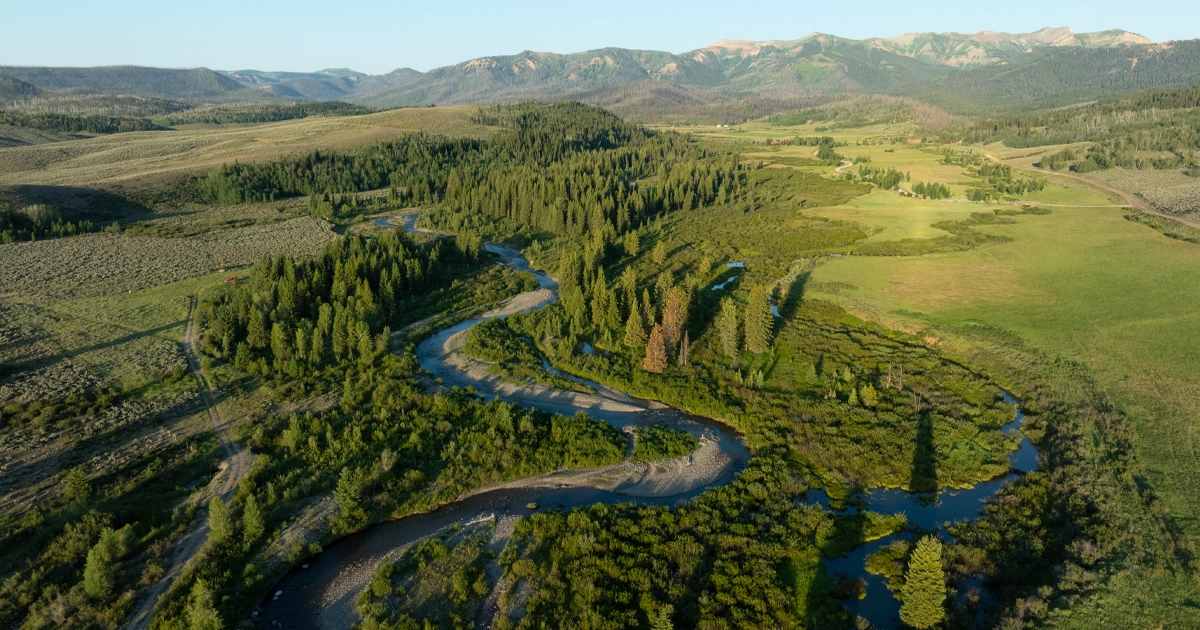
JACKSON FORK RANCH. The Hoback River is named for a pioneering trapper who ventured out West in 1811.
Published September 1, 2026

Joe Ricketts does not have a touchy-feely personality. The 85-year-old keeps his cards close to the vest. But at this very moment on his Jackson Fork Ranch, he has a catbird glint in his eye. He’s remembering the days of yore when the smart money bet against him — and lost.
First Omaha Securities
Fifty years have passed since the naysayers guffawed over their three-martini lunches about the ex-Dean Witter broker from Nebraska. It was 1975, and Ricketts had launched a retail-securities brokerage firm with $50,000 in start-up capital. The seed capital wasn’t the laugh line. The fact that First Omaha Securities wasn’t based in New York made it a cinch to go belly-up. On top of that, First Omaha stood zero chance of upending an industry standard: the sacrosanct fixed commissions paid to stockbrokers.
Lower-cost stock trading existed — it was dubbed “third-market trading” in those days — but First Omaha went all in, luring retail investors with a $25 flat trading fee that Ricketts would eventually lower to $8. It created Ameritrade Clearing to work with mom-and-pop broker-dealers at even lower rates. In 1988, it introduced the industry’s first touch-tone telephone trading system, Accutrade.
These bold innovations made the Nebraska native a stock-trading pioneer — and a fortune. In 1997, the company went public at $15 under the symbol AMTD. In 2006, the out-of-the-way brokerage acquired TD Waterhouse for $2.9 billion and rebranded itself as TD Ameritrade. The payoff came more than a decade later when Charles Schwab acquired TD Ameritrade for $26 billion in 2019. Ricketts was its largest shareholder.
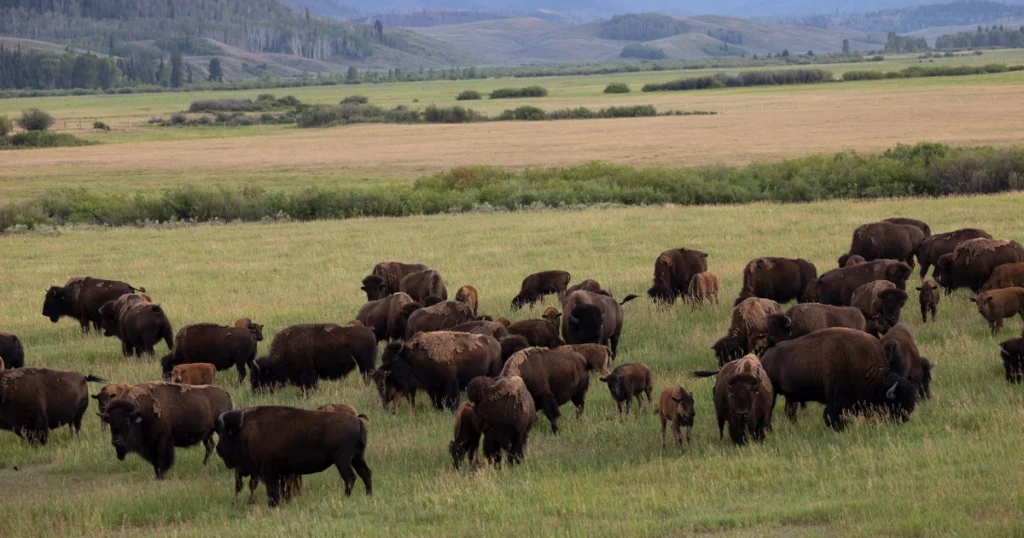
BRINK OF EXTINCTION. It was in Yellowstone National Park that bison made their last stand, warding off their demise at the end of the 19th century.
The Herd Bull
More than a few people have described Ricketts as a herd bull. He likes to be at the forefront; to make things happen. Not surprisingly, Ricketts has a profound attachment to Bison bison. A member of the National Bison Association, he sees North America’s largest land mammal as the quintessential icon of the West. He enjoys imagining life through their eyes. He also considers bison to be great teachers. He tells me they have taught him to examine how and where they want to be on a landscape. Thanks to this lesson, he can identify the location of the game trails used by his wild neighbors.
His Jackson Fork herd boasts two dozen white buffalo, a genetic characteristic that Ricketts’s wildlife team has patiently nurtured. To Native Americans, white bison are rare positive omens of change. To Ricketts, they are more than a portent. They mirror his responsibility to the land he loves and seeks to protect.
Jackson Fork Ranch
Joe and Marlene Ricketts had spent years searching for a family getaway when he discovered the Hoback Valley while on a snowmobiling trip. At the time, the 1,300-acre ranch, which fronts 7 miles of the Upper Hoback River, was featured in the Wall Street Journal. Another Ricketts holding, the 160-acre Dead Shot Ranch, sits 2 miles farther downstream.
In 2024, Ricketts acquired Granite Creek Ranch, a 33-acre inholding surrounded by the Forest Service in the southern Gros Ventre Mountains. Owned by Safari Club International (SCI), the creekfront property had been used by SCI as the American Wilderness Leadership School for conservation education since 1980.
Ricketts’s Wyoming investments aren’t limited to ranches. Given his roots in rural Nebraska, he’s a softie when it comes to keeping small towns economically viable. That’s one of the reasons he bought White Pine Resort in Pinedale, along the flanks of the Wind River Mountains, in 2024. A longtime locals’ favorite in Sublette County, the 363-acre ski hill had been on the market for four years following a 2019 fire that destroyed the main lodge.
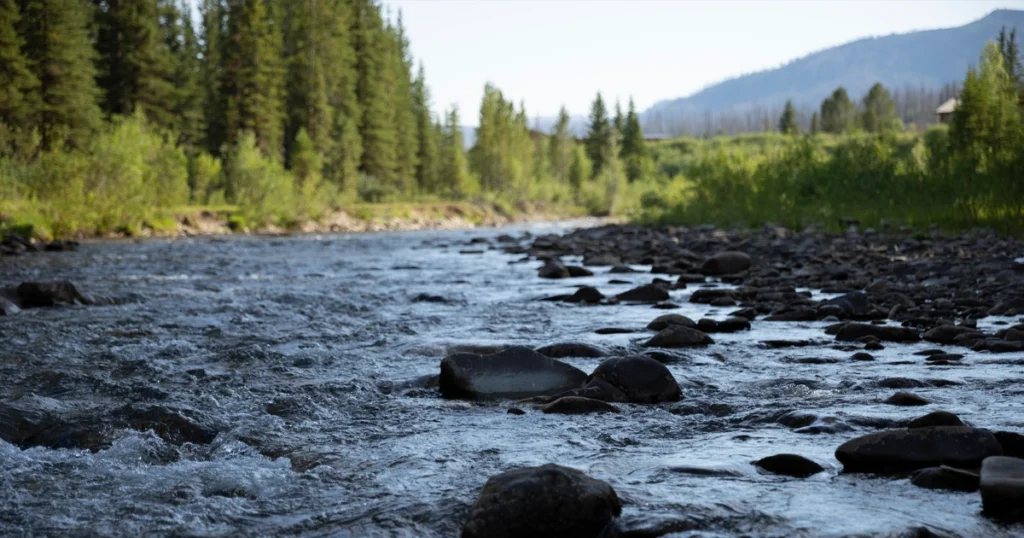
THE IMPORTANCE OF PRIVATE LANDS. More than 80 percent of the wildlife in the Greater Yellowstone accesses private lands.
Saving Yellowstone
When it comes to his Wyoming stomping grounds, Ricketts’s ambitions go beyond saving a beloved ski hill. This summer, he hosted the Saving Yellowstone Summit, which brought together leading landowners and conservation thought leaders from around the Northern Rockies.
Ricketts’s goal is to conserve epic wildlife-migration corridors that represent the long-distance biological circulatory system of Yellowstone National Park. These corridors are pulsing organic entities. They extend to every corner of the Greater Yellowstone Ecosystem, some 24 million acres that sit at the intersection of Wyoming, Montana, and Idaho. Unparalleled in the Lower 48, this enormous ecosystem, which is two-thirds federal public land, has been aptly described as the American Serengeti.
Deer 255
Nothing illustrates this pulse of hooves better than the famous mule deer doe known as Deer 255. Aided by a satellite tracking collar around her neck, scientists with the Wyoming Migration Initiative and the Wyoming Game and Fish Department documented Deer 255’s astounding commute.
Twice a year, she hoofed it more than 200 miles between her winter range in the Upper Green River Valley and Red Desert south of Ricketts’s Jackson Fork Ranch and then northward to a summer range astride both sides of the Tetons. Before her death in 2024, Deer 255’s movements helped make visible the Red Desert-to-Hoback corridor that had previously been an abstraction in the minds of biologists.
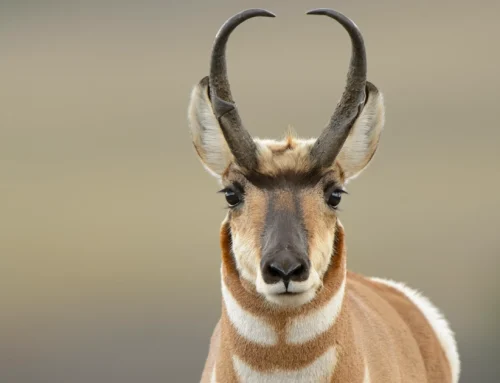
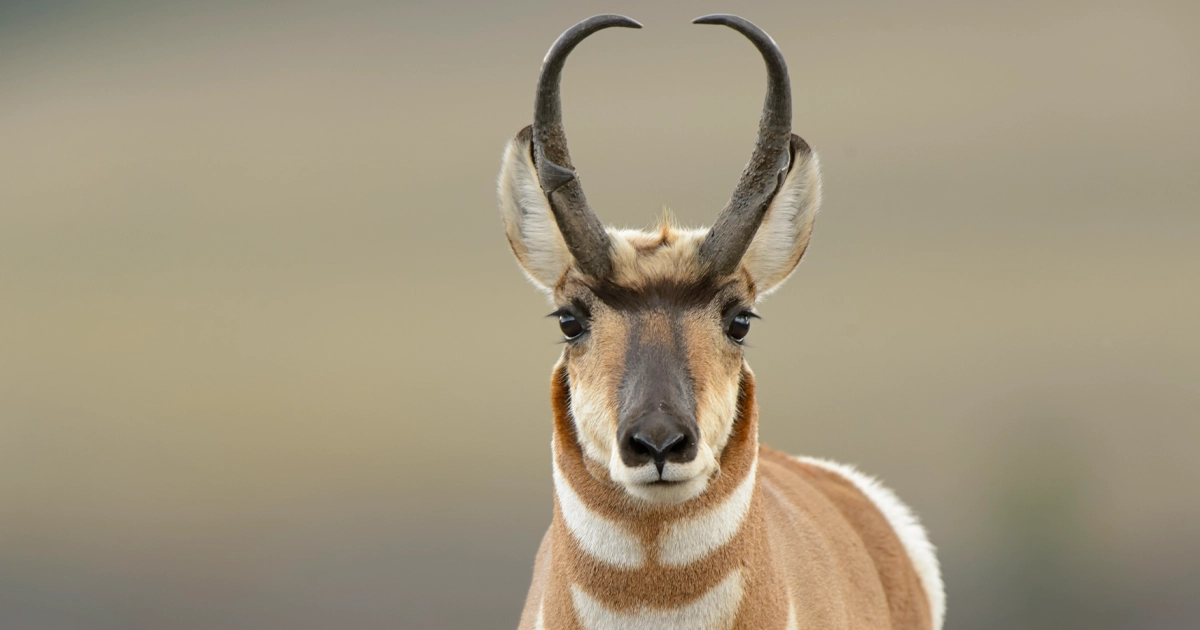
Hundreds of pronghorn follow a similar route. They head 150 miles north from wintering areas in the Red Desert to the sagebrush flats of Grand Teton National Park in Jackson Hole. Once snow starts to accumulate in that high-elevation valley, they move out. Their corridor is called Path of the Pronghorn.
Despite the name, its fate as an unobstructed migratory corridor is at risk. In addition to pinch points between mountain ranges where movement is constricted, the ancient mule deer and pronghorn passageways are in danger of being severed by residential subdivisions, barbed wire fencing, highway traffic, hunting pressure, hard-hitting blizzards, disease, and other factors.
The Power of Private Landowners
A student of statistics and a lover of maps, Ricketts has watched the proliferation of sprawl into such venerable dales as the Centennial, Madison, Shields, and Yellowstone Valleys of Montana; Teton Valley, Idaho; and the North and South Fork River corridors between Cody, Wyoming, and Yellowstone National Park.
Ricketts believes in the power of the private sector embracing a voluntary approach to conservation rather than a version that relies on bureaucratic mandates. If he and other landowners can generate sufficient revenue streams through ecotourism, for instance, they can cycle profits back into land stewardship. This self-sustaining business model minimizes the burden on future owners.
In 2025, Ricketts announced plans to develop Granite Creek Ranch into a destination resort called The Hawken, a reference to the 19th-century muzzle-loading rifle used by mountain men who explored these wildlands. Although Granite Creek hadn’t operated as a guest ranch since 1977, it held a grandfathered commercial-use permit as a seasonal guest ranch, which allowed up to 100 guests. Ricketts’s preference, however, is a much smaller development footprint.
The Hawken and a previous resort concept called The Homestead that Ricketts proposed and then shuttered are his attempts to showcase a voluntary approach to conservation rather than one mandated by bureaucrats or lawmakers.
“I’m not a big-government guy. I’m not big on federal regulations that limit free enterprise,” Ricketts says.
Purists have been critical of Ricketts, saying he doesn’t need to be a developer. It’s the same charge that was leveled at Ted Turner for expanding the suite of guest services at Vermejo, the 550,000-acre flagship property of Ted Turner Reserves in New Mexico and Colorado.
In a statement to the digital news publication Cowboy State Daily, Ricketts declared his intent for The Hawken: “This property offers a unique opportunity to showcase the unparalleled beauty and wonder of the Yellowstone Ecosystem. We aspire for this resort to be a place where conservation and education spark curiosity and inspiration, motivating visitors to cherish and safeguard nature, both here and in their own backyards.”
Courage and Creativity
Ricketts is determined that he and other private landowners will play a critical role in protecting Greater Yellowstone because they represent a critical safeguard against corridor destruction.
Because the bulk of these lands, including Ricketts’s Jackson Fork Ranch, are located along rivers and streams, they possess outsized value and priority. Outside Ricketts’s back door, thousands of elk, deer, pronghorn, moose, and other species migrate freely through his 1,300-acre ranch just as they have done since glaciers retreated from the Northern Rockies 10,000 years ago.
He recognizes that the base of public lands and land-management agencies represents the muscle mass of the Greater Yellowstone. But without private lands, the health of public lands and the region’s wildlife are in peril. Private landowners, he says, can be the vanguard of responsible capitalism.
“My goal is to start an effort that most landowners will want to be a part of,” he says.
“What happens if a private landowner proposes to build a multiunit subdivision in the middle of a wildlife corridor?” I ask.
“Well, if that happens, we’ll have to deal with it,” he says.
Ricketts insists that empowering wealth creation and leveraging its impact can be an engine for doing good by nature. Applying the same entrepreneurial mindset he used to benefit his clients, he is appealing to large landowners. It’s a strategy that not only preserves wildlife values but also respects property rights. To that end, he’s been meeting with both traditional ranchers and owners of large recreational retreats throughout 2026.
Legacy
At 85, Ricketts enjoys good health, but he is well aware of his limitations. He believes his window for making a difference is roughly the same timeframe for keeping wildlife corridors intact.
Ricketts does not want to be remembered as a person who was in a position to act but did not because it was considered too daunting or too easy to walk away.
“We don’t have a lot of time to act,” Ricketts tells me. “If these animals lose the ability to move through these corridors, we will lose them, and I don’t want that to happen.”
Within his own family, he derives enormous satisfaction watching his grandchildren become attuned to exciting things in nature that were not available to him growing up in rural Nebraska. He’s teaching them that effective conservation isn’t about having the privilege of money but putting it to use for a purpose bigger than oneself.
Once again, I sense a subtle shift in the herd bull’s demeanor. For a brief moment, the bare-knuckled brawler who relishes a good fight lets down his guard. Ricketts admits that if he and his peers squander this opportunity to protect these vital lifelines, his grandchildren will never forgive him. 
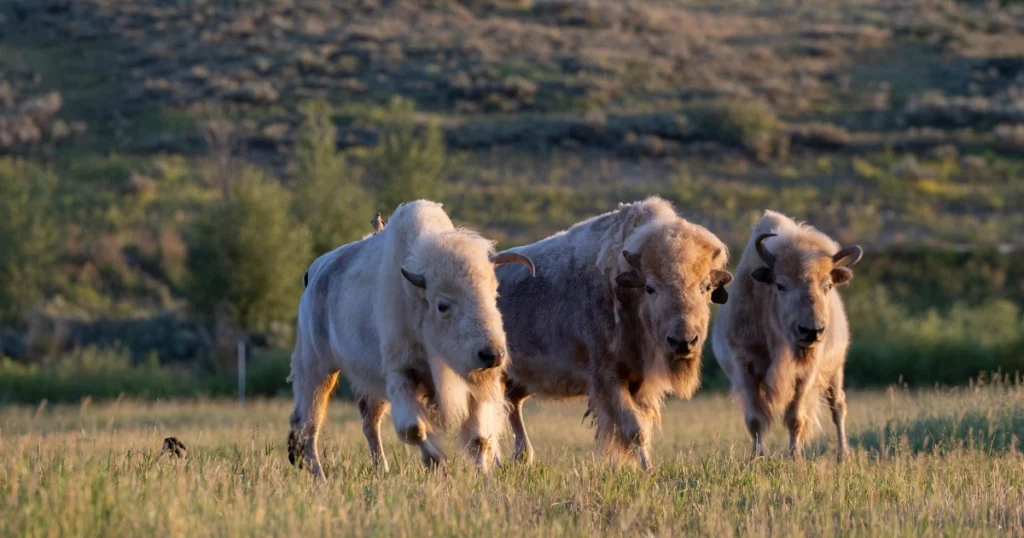
SYMBOLIC PRESENCE. The white bison bred on Ricketts’s ranch are a singular omen.